Git archive

Repositories 962Checked
  1. 965

    serveroshq/panel

    What it does
    ServerOS panel is a web control panel for operating Linux servers you already own. Operators supply machine enrollment details, Git repositories or deployment templates and workflow settings to manage deployments, monitoring and backups. Each managed machine needs a separately connected serverosd daemon; installing the panel does not automatically enroll servers. It covers CPU, memory and disk status, service logs, scheduled workflows and team activity. The inspected API routes expose tool calls behind API-key authentication, and the project documents MCP and API connections for external tools. Self-hosting requires a Docker-capable Linux server, a domain and, in the standard setup, ports 80, 443 and 8443 plus wildcard DNS. Email delivery and private GitHub repositories require separate SMTP and GitHub App configuration. The community edition built from this repository differs from the official image that includes commercial extension code. Panel code is AGPL-3.0, while paid extensions and trademarks have separate terms, and default anonymous installation telemetry should be reviewed.
    License
    AGPL-3.0 Network copyleft. Offering a modified version as a service also requires releasing the source. Review before any product use.
  2. 964

    vercel-labs/ui

    What it does
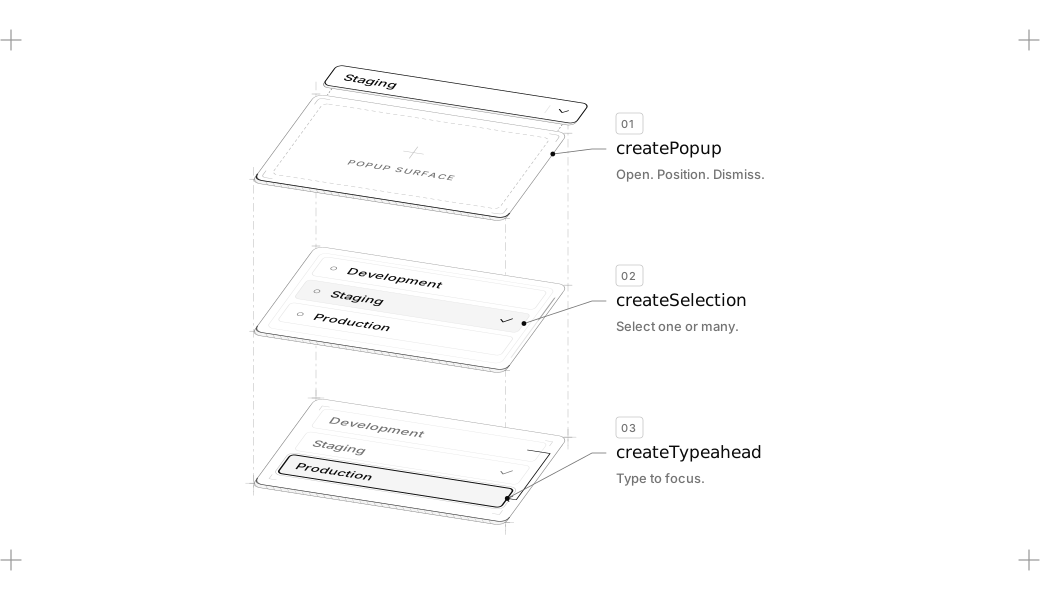
    UI SDK is a UI library for developers and coding agents to reuse interaction behaviors. It is not a finished business app or model, but a toolkit for keyboard navigation, focus, selection, popups and accessibility attributes. Developers define state, actions and component parts, then render actual elements through a framework adapter. It supplies a shared core and adapters for React, Vue, Svelte, Solid and Web Components. The official example connects a search input and clear button to one behavior definition. The dialog source also separates state, slots and actions exposed to agents. Getting started requires connecting core and the appropriate framework package to an app; the agent skill is a separate addition. Installing packages does not automatically convert existing screens. The product is beta, so APIs and behavior may change and accessibility still needs testing in the actual interface.
    License
    Apache-2.0 Permissive, with a patent grant. Commercial use is allowed; keep the notices and state your changes.
  3. 963

    wici-ai/inferssd

    What it does
    InferSSD is a local inference engine that streams large MoE models from SSD when they cannot fit entirely in RAM or GPU memory. It extends llama.cpp rather than supplying a model, taking supported GGUF weights and user requests to produce generated responses. It reads the experts selected for each token from SSD, caches them in RAM and uses CPU and GPU paths according to the environment. Browser chat and an OpenAI-compatible API allow external clients to connect. Weights must be downloaded separately and can require substantial SSD space plus runtime working memory. Official documentation describes Apple Silicon Metal and Linux CUDA environments; source builds also need Python and C/C++ tooling. The README header calls Windows work in progress while its body describes Windows 11 packages, so the actual release's supported backend needs checking. Neither universal model support nor hardware-independent speed is established; SSD, cache and request conditions matter. The network API lacks authentication and needs access controls, while model licenses remain separate from the engine. Published throughput does not guarantee answer quality or performance on our hardware.
    License
    Apache-2.0 Permissive, with a patent grant. Commercial use is allowed; keep the notices and state your changes.
  4. 962

    canivel/dynolab

    What it does
    Dyno Lab is an Apple Silicon research app for observing local model behavior and testing hypotheses. Researchers supply questions, prompts, models and experiment settings to obtain responses, activation measurements and saved artifacts. It provides request inspection, research notebooks, comparative experiments, linear probes and small sparse-autoencoder workflows. The app bundles Python and MLX, but model weights must be downloaded and started separately. It requires Apple Silicon and macOS 14 or later; pairing a Windows NVIDIA worker for larger GGUF models is an experimental GPU-pool feature. Capturing an already-loaded model and experiments that load another copy have different memory requirements. Python SDK, HTTP API and a local stdio MCP bridge are available, but starting MCP alone does not launch a model or experiment. Results are stored locally, yet an external assistant may send results it reads to its provider, so exposure needs review. Activation magnitude and model-emitted thinking are not safety certification or a faithful explanation of internal computation. Official material distinguishes exploratory experiments from validated safety monitors.
    License
    MIT Permissive. Commercial use and changes are allowed if the copyright notice is kept.
  5. 961

    snchimata/tokenfold

    What it does
    Tokenfold provides SDKs and tools for fitting material into an LLM token budget. Its users are developers supplying JSON, tool definitions and grouped context in requests. Text, context groups or provider requests produce fitted content and a receipt describing transforms, token accounting and warnings. The Rust-based Core reduces structural redundancy and checks reversible transforms by restoring the original values. Data defaults to compact ordinary JSON, while columnar representation is explicit opt-in. Select ranks whole groups for a query but is experimental and needs separately provisioned model files, runtime configuration and per-request consent. Python requires version 3.12 or later and Node requires 22 or later; base fitting needs no model or GPU. MCP and proxy interfaces are separate entry points, so installation alone does not intercept existing agent requests. Checked result access raises an error when the budget cannot be satisfied, and counts do not guarantee exact provider billing. Exact data recovery does not guarantee unchanged model answer accuracy.
    License
    Apache-2.0 Permissive, with a patent grant. Commercial use is allowed; keep the notices and state your changes.
  6. 960

    beenuar/AiSOC

    What it does
    AiSOC is a self-hosted security operations platform that consolidates alerts and records AI investigation evidence and proposed responses. It takes events from security tools connected by operators and produces alerts and investigation records through normalization, detection and correlation. Kafka transports events and PostgreSQL stores alerts and audit records, with results exposed in a web console. Prompts, tool calls and verdict evidence are recorded in the Investigation Ledger. The default deployment uses a local model without an external model API key, but real company telemetry requires separate connector setup. Its documented base environment needs Docker Compose v2, 8 GB memory and 20 GB free disk in the Docker VM, plus Python and bash. Sample data and the offline sandbox must be distinguished from real incidents and the complete production stack. Response is human-approval-oriented by default, with explicit policy authorization required for autonomy. Official material still discloses limits in hosted-model testing and sustained-operation evidence, so it does not establish every integration as verified. It is not a drop-in replacement for SIEM long-term retention and compliance search.
    License
    MIT Permissive. Commercial use and changes are allowed if the copyright notice is kept.
  7. 959

    dotnet/skills

    What it does
    .NET Agent Skills is the .NET team's collection of coding-agent guidance and host-specific agents. It packages knowledge for C# development, data access, diagnostics, builds and testing as plugins rather than providing a standalone application or model. An agent reads relevant skills in the context of code, errors and development requests to choose a workflow. Actual changes are performed by the host agent and development tools, not automatically by the repository itself. Official onboarding distinguishes marketplace or individual-skill registration and reloading in compatible hosts. The inspected SDK setup skill describes project-local installation, preserving existing settings and its required host version. Skills and MCP compatibility vary by component; Copilot agent files do not become another host's native agents. Language-server integration also requires host support. A suitable .NET SDK and task-specific tools remain necessary, and installing the collection does not activate every plugin capability.
    License
    MIT Permissive. Commercial use and changes are allowed if the copyright notice is kept.
  8. 958

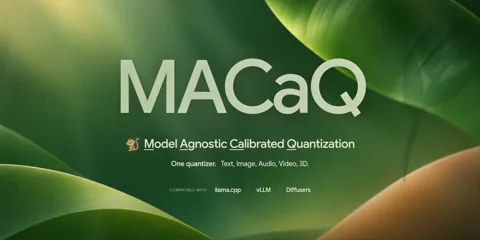
    huawei-csl/MACaQ

    What it does
    MACaQ is a calibrated quantization toolkit for reducing the numerical precision of supported model weights and, on selected backends, activations to make local inference more practical. Its inputs include matching original model checkpoints and representative calibration text, prompts or conditioning images, while its outputs include compact GGUF or safetensors checkpoints and recorded settings. In the inspected dense text path, activation statistics guide weight balancing and a block Hadamard transform before low-bit quantization and codebook refinement. Separate adapters cover documented text, diffusion and speech model families, so model agnostic should not be read as automatic compatibility with every architecture. The llama.cpp path offers two-, three- and four-bit weight formats, whereas other adapters offer W4A4, meaning four-bit weights and activations, with some components intentionally left at higher precision. Full transformed GGUF workflows use the bundled runtime, while MACaQ-R refines selected native MoE weight codes without changing their formats and is documented to work with standard llama.cpp. Preparation requires backend-specific dependencies, matching source weights, calibration data and working storage; the guides specify Python 3.12, Linux for vLLM and a CPU alternative for llama.cpp. Quantization is not repeated when saved checkpoints are loaded, but runtime compatibility and original model licensing still apply, and the diffusion guide explicitly notes unclear licensing for one community audio checkpoint. The README reports memory, speed and model-quality results, but these were not reproduced here and cannot establish the same trade-off for another model, device or application.
    License
    Apache-2.0 Permissive, with a patent grant. Commercial use is allowed; keep the notices and state your changes.
  9. 957

    tangerineturtle1/NX2navi

    What it does
    NX2navi is a fan project that rebuilds the Switch 2 version of The Legend of Zelda: Ocarina of Time, specifically game version 1.1.1, as a native x86-64 game primarily for Windows. It targets players who already hold a legally obtained dump from their own console, and the repository supplies no game files or instructions for obtaining them. The input is that dump's program and filesystem data, and the output is a locally built executable and game assets that must not be redistributed. Its translation pipeline lifts ARM64 functions into C, compiles them with a host runtime for console services, and translates graphics work into Vulkan rather than running a CPU emulator during play. The launcher prepares build dependencies and subsequent updates, while the build kit also documents a Linux source-build path with feature differences. Windows requires a compatible x86-64 processor, at least 16 GB RAM, substantial free disk space and a Vulkan 1.3 GPU with specific extensions. The authors describe it as playable but early, with memory failures, visual defects, initial shader stalls and occasional crashes still possible. The base import is MIT-licensed, but a separate notice reserves all rights in later additions and changes, so the whole repository must not be described as unrestricted MIT software.
    License
    MIT Permissive. Commercial use and changes are allowed if the copyright notice is kept.
  10. 956

    onlyreadai/onlyread

    What it does
    OnlyRead is a Chromium extension intended to reduce accidental writes when an AI agent browses real signed-in work accounts. Its input is outgoing traffic to guarded sites, and its output is a decision to continue or refuse each request rather than a rewritten page or a content summary. The inspected decision code combines method and endpoint rules, site-specific operation decoding, reviewed request labels and model judgment for remaining cases. Chrome's debugger interface pauses requests, with additional browser network rules and site-specific controls for some socket and editor paths. Setup requires a compatible Chromium browser, selected guarded sites and either the hosted judge account or credentials for a supported model gateway. Uncertain or unavailable judgment is designed to refuse a request, but the model can still misclassify traffic and the system allows policy-specific exceptions such as telemetry. Screen-driving agents need the Always setting, protection is currently site-wide rather than account-specific, and the architecture documents paths where editor guards are not network guarantees. Some redacted request descriptions leave the browser for judgment, and this review did not independently reproduce the repository's site coverage or security claims.
    License
    AGPL-3.0 Network copyleft. Offering a modified version as a service also requires releasing the source. Review before any product use.

  11. 955

    janestreet/agent_skills

    What it does
    Jane Street's agent_skills is a collection of text instructions for existing AI agents and chatbots, not a standalone tutoring application or model. The README currently lists a Socratic tutor skill intended for users who explicitly request teaching, quizzes or practice toward mastery. Given a topic and the learner's answers, it maintains a subskill map with levels from zero to five and uses that map to choose further questions. Its instructions begin with a short diagnostic, then ask one question at a time and narrow the question when an answer reveals a misunderstanding. Progress requires demonstrated performance on more than one independent check, including recall rather than simply repeating a supplied answer. Earlier material is revisited through spaced review, and completion includes a mixed assessment with both individual subskill questions and an integrative problem. One-off explanation requests are explicitly outside the tutoring loop, and the learner can override questioning to request a direct answer. A compatible agent can read the SKILL.md directory, or a chatbot can receive its text as a prompt, so the existing model and its instruction following remain prerequisites. Session transfer is described as a compact state block that a person can save and paste elsewhere, not an implemented storage backend or independently validated measure of learning.
    License
    MIT Permissive. Commercial use and changes are allowed if the copyright notice is kept.
  12. 954

    expo/exact

    What it does
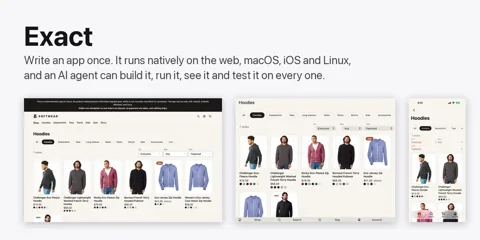
    Exact is an application runtime for developers who want one interface definition to serve web, macOS, iOS and Linux apps. Its inputs are Contract, a declarative language for views, state and actions, plus TypeScript or Rust data logic. The compiler produces a plan that becomes browser DOM and CSS on the web, while a Rust runner and layout kernel drive native controls or painting on other hosts. Data reads and writes cross a typed boundary, and declared grants restrict access to networking, files, SQLite and secrets. An agent driver exposes tree inspection, screenshots, interaction, state and clock control through a shared interface, with Contract tests reusable across hosts. The repository includes todo and local notebook examples rather than an already configured business application. Setup depends on a source checkout, Rust, pinned Bun and Chrome, with Xcode required for Apple targets and a pinned Hermes JavaScript runtime for native TypeScript. This is a changing pre-1.0 project without compatibility guarantees, while Windows control parity and delivery, Android packaging and Linux editing remain incomplete.
    License
    MIT Permissive. Commercial use and changes are allowed if the copyright notice is kept.
  13. 953

    anefzaoui/misterdownloadmanager

    What it does
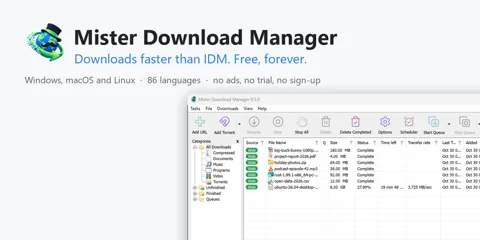
    Mister Download Manager is a desktop download manager for people collecting files from links, browsers and scheduled queues. File addresses, browser handoffs or link lists become local downloads with progress, pause, resume and destination controls. Its Rust engine probes file size and validators, splits remaining ranges among connections, writes them into a partial file and saves segment state for recovery. Video lookup uses separate yt-dlp and ffmpeg helpers, while torrent support and experimental debrid integrations are separate components using the user's own service access. An MCP server, a standard connection for AI tools, passes download requests to the running application through a token-protected local channel. Full listing and control require the optional automation API, although adding downloads remains possible without that API. Browser capture requires its extension and native messaging host, and the documented macOS builds remain untested while Linux lacks Orca and Flatpak browser support. Advertised speed comparisons come from the maintainer's local test server rather than arbitrary internet connections, and the documentation explicitly rejects DRM downloads and does not circumvent Google Drive access or download refusals.
    License
    GPL-3.0 Copyleft. Distributing software that includes this code requires releasing the source under GPL.
  14. 952

    shinyobjectz/raea

    What it does
    raea is a local rendering engine for developers and coding agents making videos, motion graphics, 3D scenes and interactive games. The actual input is a React and TypeScript composition plus assets, so a natural-language request still depends on an external agent writing the composition. Frame-based components describe what should appear at each moment, and the Rust and Bevy engine combines interface drawing, video, 3D and audio before exporting media or running live interaction. The same project can produce a video, a selected still frame or a playable application, and inspection and checking tools support an agent's review loop. Public releases target Apple Silicon macOS and x86-64 Linux and Windows, with Windows explicitly described as the least tested platform. Windows requires the Visual C++ runtime and a DirectX 12 or Vulkan driver, while source builds require Rust, Bun, CMake and platform libraries. Optional generation services, downloaded audio models and a cloud judge have their own dependencies, and the documented offline setting refuses network-dependent work. This is a changing canary release under FSL-1.1-ALv2, which restricts competing commercial offerings and changes each version to Apache-2.0 after two years, not an unrestricted open-source license today.
    License
    Custom license Custom or non-standard license. Read the license file before any reuse.
  15. 951

    tylertms/Stela

    What it does
    Stela is an experimental compatibility layer intended to run Apple Silicon software on x86-64 PCs, not a normal desktop application or a research assistant. Its input includes macOS installation material and compatible PC hardware, and its intended output is a bootable environment that models an Apple Silicon machine. The README describes a UEFI boot program, ahead-of-time and just-in-time ARM instruction translation, and a Metal driver for supported NVIDIA GPUs. The inspected boot preparation source adjusts device-tree fields, memory, display, entropy and boot arguments for the modeled hardware. The README requires an x86-64-v2 processor, UEFI with Secure Boot disabled, at least 8 GB RAM, a supported GPU, installation media and an empty partition of at least 60 GB. Setup is destructive to the selected USB drive, needs network access, and the README warns that current boot success is low and performance is slow. Building requires Rust and a recent Clang, while the notice describes different GPL terms for different distributed components and separately downloaded vendor firmware. Claimed macOS and application compatibility was not tested here, and the project explicitly leaves compliance with Apple's software terms to the user.
    License
    GPL-2.0 Custom or non-standard license. Read the license file before any reuse.
  16. 950

    aws/aws-emulator

    What it does
    AWS Emulator gives developers a local AWS API endpoint for testing applications without creating real AWS resources or requiring an AWS account. Applications send ordinary CLI or SDK requests to emulated services and receive responses backed by local resource state. Server mode exposes an endpoint without a graphical interface, while the inspected Rust embedded facade supplies an SDK HTTP client and creates a fresh in-memory engine for each emulator instance. Linux packages provide a server route, Windows and macOS use the documented container route, and embedded Rust tests require compiling the emulator. A full source build requires Rust, a C compiler and substantial build storage, with the README specifying at least 100 GB for the build directory. Resources are temporary, compatibility varies by service and operation, and release fidelity information must be checked against the application's actual calls. AWS explicitly says this is neither a production service nor a security test environment, and executed function code is not isolated from the host user. Usage telemetry is enabled by default with opt-out controls, and this review inspected documentation and source without running service compatibility tests.
    License
    CC0-1.0 Custom or non-standard license. Read the license file before any reuse.
  17. 949

    GoogleChrome/modern-web-guidance

    What it does
    Modern Web Guidance supplies coding agents with maintained web platform guidance instead of relying only on older patterns in model training data. Its input is a focused description of a browser capability or interface task, and its output is a selection of guides containing implementation patterns, pitfalls, accessibility considerations and browser fallbacks. The documented search mechanism combines local semantic matching with BM25 keyword search, after which the agent retrieves relevant guides into its context. The distribution includes skill instructions and guides, while its linked source repository contains the authoring and evaluation implementation. Use requires an existing compatible coding agent and a JavaScript package execution environment, not a separately hosted inference service from this project. Experimental Origin Trial APIs and recently shipped unstable features have explicit retrieval opt-ins, and browser support still needs to match the application's own policy. Local guide search does not mean zero outbound activity: the README separately discloses usage telemetry including agent-generated search queries and an opt-out. The project publishes guided versus unguided agent evaluations, but these are project-reported results rather than proof of improvement on every application. Software and guide content have different license terms, so reusing the documentation requires checking its attribution requirements.
    License
    Apache-2.0 Permissive, with a patent grant. Commercial use is allowed; keep the notices and state your changes.
  18. 948

    wdcpclover/ai4paper

    What it does
    AI4Paper is a research reading and writing service for people who otherwise move between literature search, PDF reading, notes and review drafting. Its browser workspace and Zotero plugin accept papers, bibliographic files or DOI lists and provide library organization, translation, explanations, source-linked notes and writing assistance. The README describes expanding Chinese search terms into English queries, searching multiple sources and using citation networks to prepare review material. Official tutorials show a selected-paper review workflow whose input depth can be titles, abstracts or reading notes, so an output should not automatically be treated as full-text synthesis. Users need an account, and the plugin route requires a compatible Zotero installation; some functions require membership and consume AI quota. The product advertises cloud model options and a local Ollama option, but this does not establish that every search, translation and account function works offline. The repository ends with an all-rights-reserved notice and does not establish an open-source reuse license for the complete service. Its own review tutorial says it did not actually generate the review during that walkthrough, and citation accuracy, translation quality and the advertised literature corpus were not independently verified here.
    License
    No license No license file found. Without a license, reuse of the code is not permitted by default.
  19. 947

    GoogleChrome/modern-web-guidance-src

    What it does
    Modern Web Guidance Source is the authoring and evaluation repository behind web development skills for coding agents, rather than just the installable guide collection. It addresses agents choosing outdated JavaScript patterns or missing browser compatibility and accessibility requirements. An English task query produces matching guide identifiers, and retrieval supplies focused implementation patterns, caveats and fallbacks. The distributed search combines local semantic matching with BM25, a keyword relevance method, while retrieval controls access to experimental and recently changing features. This source repository adds guide authoring materials, example applications, build tooling and an evaluation harness that checks guided and unguided agent changes with browser assertions. The dialog example distinguishes blocking confirmations from nonmodal panels and explains native focus handling and conditional fallbacks. Source development requires Node.js 22.18 or later and pnpm, while evaluation additionally needs the chosen agent's environment and authorization. Published evaluation gains are maintainer results on their tasks, not a guarantee for other applications, and local search does not mean telemetry is absent because the CLI records generated search queries and guide usage unless disabled.
    License
    Apache-2.0 Permissive, with a patent grant. Commercial use is allowed; keep the notices and state your changes.
  20. 946

    homeassistant-ai/ha-mcp

    What it does
    HA-MCP exposes Home Assistant management operations to AI clients through MCP, the protocol used to describe and invoke application tools. An AI client turns a user's request into structured tool arguments, and the server returns device states, histories, configuration data or operation results from the connected Home Assistant instance. Its tool registry covers device control as well as automation, script and dashboard editing and diagnosis from logs and execution traces. The inspected server initializes a FastMCP tool surface with visibility filters, optional search-based discovery and per-call enforcement rather than relying only on a model instruction to be careful. The recommended in-process integration requires a compatible Home Assistant installation, with the documented server setup floor at Home Assistant 2026.8.0, and an administrator account's access credential. Local and remote connection options differ, and a secret connection URL can itself be a credential that must be protected. Read-only connections hide and block writes, but the same credential can still access the normal endpoint, so this mode is not a separate credential-level permission boundary. Direct file and YAML editing are opt-in beta features, and backups and configuration checks do not eliminate semantic errors or the need for independent recovery access. Running the server locally does not guarantee local AI processing, because the selected MCP client can process Home Assistant data under its own privacy policy. This is a Home Assistant administration tool, not evidence of compatibility with industrial control systems or a guarantee that generated automation is safe.
    License
    MIT Permissive. Commercial use and changes are allowed if the copyright notice is kept.
  21. 945

    FluentRead/FluentRead

    What it does
    FluentRead is a browser extension for readers who need translations beside the original rather than a separate translated page. It accepts webpage passages, selected text and supported documents, and returns bilingual reading views with optional AI explanations, image text recognition and video subtitle tools. Its website adaptation catalog combines shared content profiles with site-specific rules to select reading areas and protect code, forms and navigation. Translation text goes to the chosen service, which can be a free service, a configured cloud API, an AI provider or a supported local model. Users select languages and a provider after adding the extension, while AI explanations require a working AI configuration and provider charges remain separate. The document reader supports PDF, ePub and DOCX among other formats, with file-size limits, editable translations and exports. Recognition errors, technical terms, changing website structure and differences between extension and userscript features still require review. Current public releases do not offer ChatGPT subscription sign-in, and cloud translation can send selected content and permitted context outside the browser.
    License
    GPL-3.0 Copyleft. Distributing software that includes this code requires releasing the source under GPL.
  22. 944

    github/gitignore

    What it does
    GitHub's gitignore repository is a curated collection of file-exclusion templates for developers using Git, not an AI service or a repository-cleaning program. GitHub uses this collection in its repository and file creation template selectors. Root templates cover common languages and technologies, Global templates cover editors and operating systems, and community templates cover more specialized tools or older versions. A developer selects and adapts patterns for a project, and Git then uses those patterns to decide which otherwise untracked paths to leave out of normal tracking operations. The inspected Node template covers dependencies, caches, build outputs and environment files while allowing an example environment file, and the Python template includes virtual environments, bytecode and notebook checkpoints. Project-wide rules can be shared in a .gitignore file, while personal editor rules can be kept in a separate global exclusion configuration. Already tracked files are not removed by adding an ignore rule, and negation rules cannot rescue a file inside an excluded parent directory without fixing the parent rule. These templates do not detect secrets or remove leaked content from history, and broad exclusions can hide material that a project actually needs to preserve. The collection is offered under CC0, but choosing the correct rules and deciding which lockfiles or generated artifacts belong in version control remain the developer's responsibility.
    License
    CC0-1.0 Custom or non-standard license. Read the license file before any reuse.
  23. 943

    OpenMontageInc/OpenMontage

    What it does
    OpenMontage is a video production toolkit for creators and teams that want a coding assistant to coordinate work beyond generating a single clip. It accepts a written brief, existing footage or a reference video, then produces research, scripts, scene plans, media assets and a rendered video. The assistant itself coordinates the stages by reading YAML workflow definitions and Markdown stage guides, rather than relying on a separate automatic orchestrator. Python tools handle media operations and persistence, while Remotion, HyperFrames and FFmpeg provide composition and rendering paths. The inspected checkpoint code validates required artifacts and proposal approval, and checks predecessor completion before advancing stages. Setup requires a coding assistant, Python, Node.js and FFmpeg, with provider credentials or suitable local hardware for some generation paths. Offline speech and open footage provide alternatives to paid generation, but they do not make the assistant, all media rights or every provider free. Published sample costs and quality claims are author reports, and this review did not render a video or verify end-to-end reliability.
    License
    AGPL-3.0 Network copyleft. Offering a modified version as a service also requires releasing the source. Review before any product use.
  24. 942

    NotRexed/Hookshot

    What it does
    Hookshot is an experimental project for statically recompiling the specific Nintendo Switch 2 game described by its repository into a PC program. It describes a workflow in which owners use their own game material to create a local executable. According to the README, inputs are a supported game package or romfs and exefs folders, and outputs are a PC executable and associated local material. The documented pipeline translates ARM64 code to C, compiles it with a host runtime and handles graphics calls through Vulkan. It describes a Windows builder and Linux AppImage, but requires the supported game version and a suitable Vulkan graphics environment. The README states that the repository does not include the game, keys or a finished game executable. It also warns that testing is limited and other game areas and graphics cards are not sufficiently verified. This description summarizes repository claims and design records, not independent verification of the game's release, runtime viability or rights status.
    License
    GPL-3.0 Copyleft. Distributing software that includes this code requires releasing the source under GPL.
  25. 941

    anomalyco/rune

    What it does
    Rune is a UI framework that builds interfaces from Rust code and renders them on the GPU. Its main documentation targets macOS, Windows, Linux and the web and covers interface inspection by coding agents as well as people. Inputs are application state, view functions and human or scripted interactions; outputs are running interfaces or headless PNGs and element trees. The inspected hello example changes state when a switch is clicked and updates its text and knob position accordingly. Its test uses virtual pointer input and frame advancement to check the state change and knob movement. Core documentation describes layout, text, theme tokens, spring animation and headless input. Adoption requires connecting Rune as a Rust project dependency and writing state and views; installation does not convert an existing application. It is pre-release, so the documentation recommends pinning a specific dev revision, and target-platform graphics, real input and accessibility support require separate validation before adoption.
    License
    MIT Permissive. Commercial use and changes are allowed if the copyright notice is kept.
  26. 940

    Ebony-Vinyl/EAC-Desktop

    What it does
    EAC-Desktop is an application that packages DeepSeek Harness as a desktop workspace. It targets users who want conversations, project-file work, tool execution and plugin management around a project directory. Task requests, project files and model configuration feed a workflow in which Harness runs conversations and tools and the interface exposes file changes and results. Its documentation separates a Tauri window and tray shell, a Node sidecar for startup and environment orchestration, and a Harness agent kernel. Described capabilities include reviewing and reverting file changes, conversation compaction, model configuration and plugin-management entry points. Distribution packages prepare runtime resources, but model calls depend on the configured provider, while plugin activation and extra dependencies vary by package. The inspected environment adapter calls DPX environment creation, path and runtime-variable APIs to separate default data locations by release channel. This is not a filesystem sandbox: absolute-path access still depends on operating-system permissions, and third-party component licenses require separate checking.
    License
    MIT Permissive. Commercial use and changes are allowed if the copyright notice is kept.
  27. 939

    meta/astryx

    What it does
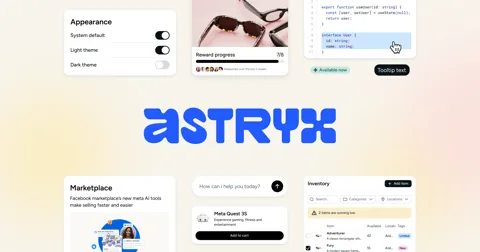
    Astryx is a design system that supplies React components together with visual conventions. It is intended to give developers, designers and coding agents a shared component reference. Inputs are React code, component properties and theme settings, and outputs are web interfaces such as buttons, forms and page layouts. It supplies prebuilt CSS and typed React components, with CSS custom properties controlling theme appearance. Its CLI can retrieve component documentation, emit page template source and eject component source into a project for customization. Adoption requires React 19 or later and the relevant packages, ordered stylesheet imports and a connected theme provider. Ordinary consumption needs no separate StyleX build plugin, but installing packages does not automatically convert existing screens or configure an agent. The project is in beta, and experimental components and some chart packages are outside stable distribution, so package release status needs separate checking.
    License
    MIT Permissive. Commercial use and changes are allowed if the copyright notice is kept.
  28. 938

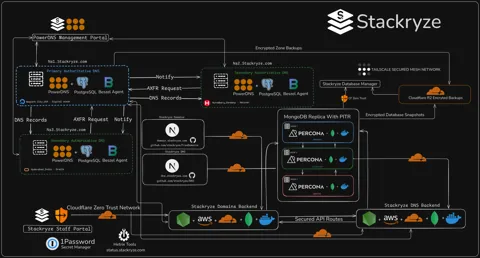
    stackryze/FreeDomains

    What it does
    FreeDomains is the repository for Stackryze's managed subdomain service for developers, students and open-source communities. It should be distinguished from a tool that grants ownership of a top-level domain. Users supply a desired name, parent domain and DNS destination, then request a subdomain through the service to point at hosting or their own infrastructure. The inspected frontend includes login, registration, DNS management and activity screens. Its API client sends availability checks, creation, renewal, deletion, restoration and nameserver updates to a backend. The source uses React and Vite and requires an API endpoint configuration and authenticated backend connection. Downloading the repository or building its interface neither starts a DNS service nor grants a subdomain. Service continuity and usage conditions cannot be guaranteed from this source inspection, and the complete backend and DNS operation have not been verified.
    License
    AGPL-3.0 Network copyleft. Offering a modified version as a service also requires releasing the source. Review before any product use.
  29. 937

    kepano/kepano-obsidian

    What it does
    This repository is an Obsidian vault template for people who organize notes by connecting them. It is starting material containing folders, Markdown documents, note templates and application settings, not a standalone executable or AI model. Users enter meeting content, project information and reading notes to accumulate linked records with properties. The meeting template includes date, organization, location, people and topics, while the project template includes organization, start, URL and status. Included settings record enabled features such as search, backlinks, daily notes, templates and Bases. Getting started requires downloading and extracting the material and opening that folder as a vault in Obsidian. Sync and Publish are disabled in the supplied core settings, so downloading it does not automatically synchronize or publish anything. The author presents this as a personal organizational example, not a guaranteed organization-wide permission or collaborative editing system.
    License
    MIT Permissive. Commercial use and changes are allowed if the copyright notice is kept.
  30. 936

    sostenesfreitas/ocarina-recomp

    What it does
    Ocarina Recomp is an experimental project for building Ocarina of Time as a native Windows program from game files supplied by the user. It is aimed at players and contributors investigating this particular game, not at running arbitrary console software. The input is the user's copy of the supported game version, and the output includes a local executable and generated code. Its generator translates ARM64 instructions into C, which is compiled together with a runtime that supplies console services. The graphics path converts NVN 2 calls to Vulkan and translates shaders to SPIR-V. The documented starting environment is 64-bit Windows 10 or 11, an AVX2 processor, and a Vulkan 1.3 GPU with mesh shaders, with internet access required during preparation. The repository states that it contains no game, keys, or ready-to-play game executable and warns against sharing generated game-derived files. The maintainer reports testing only the opening area on one PC, leaving most of the game and AMD and Intel GPUs untested. Some architecture documentation still describes the inherited Tears of the Kingdom project, so it cannot establish support for additional Ocarina versions or hardware.
    License
    GPL-3.0 Copyleft. Distributing software that includes this code requires releasing the source under GPL.
  31. 935

    JenkinWoo/sheeridVerify

    What it does
    sheeridVerify is a Node.js workbench for learning and authorized testing of SheerID verification workflows. Its intended users are educators, researchers, and testers with permission to handle the submitted information. A job takes a verification link, a name, a birth date, and configured school and document sources, then produces queue progress, logs, and a result reflecting the remote state. It queries the current verification step before choosing browser form interaction or document upload. Documents are read as original PNG, JPEG, or PDF bytes rather than generated or altered, and interactive human challenges remain with the user. The web workbench controls concurrency and allows cancellation, resumption, and deletion, but its queue and history are held in memory and disappear on service restart. When a submission response is uncertain, the workflow queries the remote state instead of immediately repeating the write. It requires Node.js 22.15 or newer, Camoufox for the browser branch, and access to SheerID and any configured document or proxy service. Real personal information can reach those services, and deleting a local task does not revoke a remote submission or erase disk logs. Constructing an email string does not prove ownership or student status, and the project disclaims affiliation with SheerID and any guarantee of successful verification.
    License
    ISC Custom or non-standard license. Read the license file before any reuse.
  32. 934

    voyager-so/vork

    What it does
    vork is a research-preview 3D and visual-effects renderer for agents and developers who author scenes as code rather than operate an editor. It accepts scene JSON with geometry, materials, lights and cameras, and Python or TypeScript SDKs can produce the same scene data. It renders still images, video, frame sequences and OpenEXR outputs, with channels such as depth and object identifiers. Its default renderer combines raster visibility with ray-traced lighting, while a separate profile provides path tracing. Slang programs can customize camera rays, materials, light propagation and simulation. Supported environments are recent NVIDIA GPUs on Windows or Linux and Apple Silicon with Metal, not AMD, Intel or CPU-only rendering. New programs can take substantial time to compile, and large scenes or dense transparency can fail. Fog and participating volumes are absent, and the supplied visual simulations and speed comparisons do not establish scientific accuracy or equal-quality speed advantages.
    License
    Custom license Custom or non-standard license. Read the license file before any reuse.
  33. 933

    Leviidev/Henge

    What it does
    Henge is an emulator for people who want to run macOS on an iPhone or iPad. It takes Apple's restore image and a virtual Mac's disk state and presents a macOS desktop on the device. Because iOS applications do not have hypervisor access, it translates arm64 guest instructions through its own JIT engine instead of using hardware virtualization. A virtual GPU accepts guest graphics commands and replays them through Metal. Touch acts as a trackpad, with keyboard and mouse input and shared-folder and clipboard features also described. It requires a supported Apple device, iOS or iPadOS 17 or later, JIT availability and substantial storage, while installation retrieves Apple software separately. The README says testing has so far been limited to an iPhone 17 Pro and real-device iPad testing has not yet occurred. Apple Account sign-in fails, application graphics compatibility is limited, and the emulator is slower than a real Mac.
    License
    GPL-2.0 Custom or non-standard license. Read the license file before any reuse.
  34. 932

    Pilipala9919/MarcoMovie

    What it does
    Marco Movie is a media player and content-management client for Android TVs, phones and tablets, with a separate Flutter project for desktop and Apple mobile platforms. It takes configurations, media sources and playlists that users obtain with the necessary rights and outputs browsing, search and playback screens. TV interaction uses remote-control focus navigation, while mobile devices have a touch-specific interface. It provides favorites, viewing history, subtitles and playback controls using Media3 or the Android system player. Search covers imported searchable sources rather than the entire internet, and the project supplies no media catalog, configuration addresses or membership rights. Device compatibility must be checked for the selected build, and the Flutter client does not support Android-specific JAR extensions. Imported services receive the relevant requests, and optional extensions execute inside the app without a guaranteed security sandbox. README and status documents differ on some version and rendering-support details, while DRM authorization and broad real-device playback remain incompletely validated.
    License
    GPL-3.0 Copyleft. Distributing software that includes this code requires releasing the source under GPL.
  35. 931

    metadist/synaplan-desktop

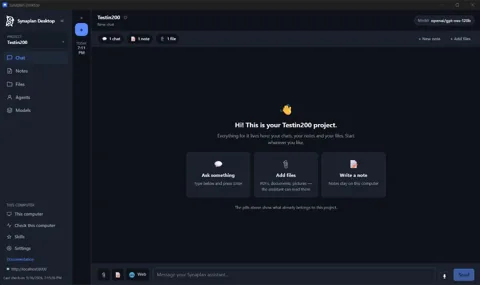
    What it does
    Synaplan Desktop connects a user's computer to a Synaplan workspace so that chat can lead to local file work. It takes requests, permitted files and installed Agent Skills and produces local artifacts such as reports, tables, calendar files and unsent email drafts. The native client uses Tauri and Vue and communicates with the server through pairing APIs and an Anthropic-compatible Messages gateway. A scoped pairing key is normally kept in the operating system's secret store. Local execution uses approved interpreters and structured program arguments, rejecting shells, network command-line tools and inline code. Skills needing unrestricted shell or network access do not run unchanged, and local Python or other required tools must already be available. The release is an unsigned preview for Windows, macOS and Linux, with signed public installers not yet published according to the README. Source inspection also shows that Windows timeout handling terminates the direct child rather than guaranteeing termination of its descendants, so isolation claims require separate validation.
    License
    Apache-2.0 Permissive, with a patent grant. Commercial use is allowed; keep the notices and state your changes.
  36. 930

    ppmpreetham/BUI

    What it does
    BUI is a library for developers building standalone desktop interfaces with Blender-like widgets without installing Blender. It accepts interface code and input events, then produces windows or offscreen pixel buffers and interaction callbacks. Bindings include Python, Rust, JavaScript, React, Svelte, C, C++ and Dear ImGui, with syntax layers for tkinter and parts of Qt. The common execution layer is a retained-node C runtime that reimplements interface drawing and interaction rather than running Blender's full application. Software rasterization is the default, with optional Direct3D 11 rendering on Windows and OpenGL 3.3 on Linux. Environment requirements depend on the binding, and macOS support is experimental with additional restrictions. Compatibility syntax is not complete behavioral equivalence, and the documentation lists missing accessibility APIs, input-method support and per-character font fallback. The project declares GPL-3.0-or-later, and its promotional speed comparisons do not establish performance in a particular application.
    License
    GPL-3.0 Copyleft. Distributing software that includes this code requires releasing the source under GPL.
  37. 929

    skaft-software/octet

    What it does
    octet is a terminal coding agent for developers who want a native Rust runtime with cloud or local models. It takes prompts, source files and optional media and returns answers, file edits and command results. One process manages the agent loop, sessions, policies, persistence and terminal interface. Tools can be added through subprocess extensions, while MCP and subagents are optional integrations. Its first Pi-compatible release supports parts of the Pi extension ecosystem, but compatibility has documented gaps and arbitrary Pi transcripts are not imported. Sessions use append-only JSONL records with branches and checkpoints, and interrupted mutating calls are not automatically replayed. Model credentials and the chosen provider or local model must be prepared, and Windows support is still a preview. Full operating-system access is the default, and its approval-based safe mode is not a sandbox for commands or trusted extensions.
    License
    MIT Permissive. Commercial use and changes are allowed if the copyright notice is kept.
  38. 928

    darkmatter/nixmac

    What it does
    nixmac is a macOS configuration manager that places an AI agent in front of Nix and nix-darwin settings. It is intended for Mac users who want to describe package or system-setting changes instead of editing Nix files directly. A natural-language request and an existing configuration become edited files, a change summary, and, through a separate apply path, a new system configuration. The agent reads files, searches packages and documentation, makes edits, and revises them using check results. The inspected implementation uses a dry-run Nix check during evolution, which does not perform the full package build described more loosely by the README. The apply path performs an actual build as the user and then activates the resulting system with administrative privileges. Git history and saved system paths support review and rollback, but restoring files and reactivating a system are separate operations. The documented environment is macOS with Nix flakes, nix-darwin configuration, and devenv, with models supplied through OpenRouter, OpenAI-compatible endpoints, or Ollama. Dry-run success does not establish successful activation or compliance with the user's intent, and a separate review button does not by itself prove an enforced backend approval boundary.
    License
    MIT Permissive. Commercial use and changes are allowed if the copyright notice is kept.
  39. 927

    66HEX/frame

    What it does
    Frame is a native desktop interface for converting media with FFmpeg. It is aimed at users who need to adjust video, audio, images, subtitles, and metadata without composing conversion commands manually. It takes source files and conversion settings and produces media files in the selected output format. FFprobe inspects the source, and the shared Rust conversion core constructs arguments and checks combinations of containers, codecs, and pixel formats. The interface provides resizing, cropping, filters, audio-track selection, subtitle processing, and metadata preservation or replacement. A task controller limits concurrent FFmpeg processes and supports pausing, resuming, cancellation, progress display, and logs. Windows, macOS, and Linux are documented, but available hardware encoders and codecs depend on the operating system, GPU, and supplied FFmpeg build. Native bundles include FFmpeg and FFprobe, whereas the Flatpak uses tools from its runtime, and release updates access GitHub. Release signing and notarization are incomplete according to the README, and neither format validation nor advertised encoder support guarantees the quality or compatibility of a particular converted file.
    License
    GPL-3.0 Copyleft. Distributing software that includes this code requires releasing the source under GPL.
  40. 926

    Usagi-org/ai-goofish-monitor

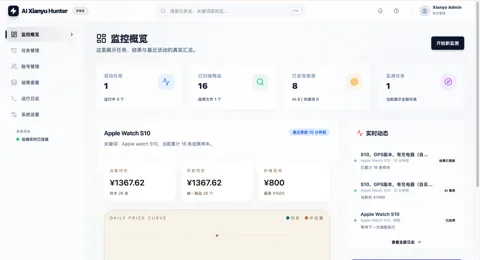
    What it does
    ai-goofish-monitor is a Web-managed system for monitoring listings on the Xianyu secondhand marketplace. It accepts search terms, prices, regions, schedules, account login state and either natural-language requirements or keyword rules. Playwright gathers listings, item details, seller information and images, while the analysis path applies a multimodal AI model or keyword matching. It stores tasks, results and price history in SQLite and can notify configured channels about recommended items. The Web interface manages tasks, accounts, criteria, logs and result browsing, with multiple tasks and scheduled runs. It needs a Python and browser environment or the provided container, plus an external image-capable model endpoint for AI analysis. Login cookies require protection, and AI analysis can transmit item and seller information to an external provider. Account and proxy rotation and automation-concealment behavior require platform-policy and security review, and neither reliable continued collection nor the accuracy of recommendations has been independently verified here.
    License
    MIT Permissive. Commercial use and changes are allowed if the copyright notice is kept.
  41. 925

    render-oss/render-mcp-server

    What it does
    Render MCP Server is Render's official bridge between an AI application and resources hosted on Render. It uses MCP, a protocol through which an AI application discovers tools and passes structured parameters to them. Inputs include workspace and resource identifiers, log filters, service settings or SQL, and outputs include resource details, operational records and query results. Tools cover service and database creation, deployment history and triggering, logs, metrics and environment-variable replacement. The Postgres query tool wraps queries in a read-only transaction, but other tools can change infrastructure or initiate deployments. Clients can connect to the hosted endpoint or run a local executable or container with appropriate credentials. Database queries use the external database connection and remain subject to its IP allowlist. This is not complete Render administration, and sensitive information can still reach the AI context even though the server attempts to reduce exposure.
    License
    Apache-2.0 Permissive, with a patent grant. Commercial use is allowed; keep the notices and state your changes.
  42. 924

    render-oss/cli

    What it does
    Render CLI is Render's official command-line client for developers and operators managing Render resources. It accepts commands, resource identifiers and options, and returns interactive menus or structured JSON, YAML and text output. It supports service and datastore inspection, deployments, restarts, one-off jobs and live log filtering. It also provides SSH and Postgres sessions and validation of Blueprint configuration files. Non-interactive operation is intended for scripts and CI/CD, with deployment waiting and failure exit status available for automation. It needs a local executable, Render access and authentication, using browser-authorized CLI tokens or an API key for automated environments. Commands operate on the active workspace, and write operations can affect live resources rather than merely generate suggestions. Current documentation states that usage telemetry is enabled by default, and sensitive credentials, confirmation policy and command-specific external dependencies still require operational care.
    License
    Apache-2.0 Permissive, with a patent grant. Commercial use is allowed; keep the notices and state your changes.
  43. 923

    clshortfuse/renodx

    What it does
    RenoDX is a toolset for modifying game rendering through ReShade addons. It is aimed at developers of graphics mods, including changes to HDR output, rather than at business document or media conversion workflows. It takes game rendering events, identified shaders, replacement shader code, and settings, then changes GPU rendering behavior and saves user settings. Its core supports shader replacement, buffer injection, overlays, output-buffer upgrades, and texture-resource upgrades. The repository also provides an FPS limiter, a developer kit, and shader decompilation tools. The developer kit can expose frame, shader, and resource inspection to an MCP client through a local bridge and named pipe. The documented build and live inspection path uses Windows and ReShade, with the game, addon, and bridge running on the same machine. Decompilation is best effort, texture replacement is experimental, and a developer-kit experiment must be validated separately as a shipping mod. Compatibility depends on the game and rendering path, so broad compatibility claims do not establish that a particular game works or permits the modification.
    License
    MIT Permissive. Commercial use and changes are allowed if the copyright notice is kept.
  44. 922

    zed-industries/zed

    What it does
    Zed is a desktop code editor for developers who want to edit a project together and work with AI in the same interface. It takes project files and editing requests and produces file changes and agent conversation results. Its collaboration features show participants' cursors and edits in real time and provide voice communication. The editor also hosts external agents through ACP, a protocol connecting an editor to an agent process. External agents generally manage their own runtime, authentication, models and tools rather than inheriting all of Zed's settings. It runs on macOS, Linux and Windows, while a web version is not available according to the README. Collaboration requires signing in, and sharing a project gives collaborators access to files inside that project. Model data handling and tool permissions must be checked separately for the selected agent and provider.
    License
    Custom license Custom or non-standard license. Read the license file before any reuse.
  45. 921

    KKKKhazix/agent-autoloop

    What it does
    This automation layer lets terminal agents react to events and ask a person only when a decision is needed. It calls already installed and authenticated executors such as Claude Code and Codex rather than supplying its own model. Schedules, GitHub events and external HTTP events are assigned to agents and workspaces by rules. Final replies and structured receipts become completion records, question cards, notices or deferred follow-ups. While awaiting an answer, the agent process exits and can resume the existing session after a response. It requires macOS or Linux, Node 24, Git, curl and an authenticated agent; the README currently states Windows is unsupported. Event sources, notification channels, agents and delivery pipelines are plugins requiring configuration. Some channels and business recipes have only simulated validation, and the generic command adapter does not enforce every executor's permissions. Model usage belongs to the connected account, while hostile input and file access under the same system account require separate controls.
    License
    MIT Permissive. Commercial use and changes are allowed if the copyright notice is kept.
  46. 920

    s1dashu/quiet-md

    What it does
    This beta notes app creates and stores documents on a personal computer without a cloud account. Rust and GPUI draw the interface, while documents and attachments remain in an ordinary local folder. Text, tables, formulas, images and files are organized through a document tree and search. The native note format is Feishu and Lark DocxXML, not Markdown. It imports Markdown and DocxXML and exports Markdown and PDF, with printing support. Published builds target Apple Silicon on macOS 13 or newer and Windows x64 on Windows 10 2004 or newer. After installation it uses a local library, while synchronization requires a separate tool. Version 0.1.4 includes optional online update checks, so local-first does not mean every network request is absent. The format has documented preservation limits including some table whitespace, and the MIT code license does not cover all icons and branding.
    License
    MIT Permissive. Commercial use and changes are allowed if the copyright notice is kept.
  47. 919

    JuneYaooo/rea-video

    What it does
    This CLI and agent skill help video makers understand a reference video's production methods and editing structure shot by shot. A video file is split into shots and examined for frames, subtitles, speech, music and other evidence. Outputs include explanations, remake routes, extracted images, and HTML and JSON reports. It distinguishes filmed, AI-generated, code-rendered and mixed footage, but classifications can be wrong. Optional video-model analysis or review by an image-capable agent supplements the basic tools. Python 3.10 or newer and ffmpeg are required, and initial analysis downloads an audio-separation model. External video models require separate API configuration, with failures identified in the report. AI-shot regeneration needs a separate capsule-cinema connection; automatic Remotion project generation for code shots and automatic quality scoring are not complete. Compression and recordings of real screens can mislead classification, and rights to footage, music and likenesses must be checked separately.
    License
    Apache-2.0 Permissive, with a patent grant. Commercial use is allowed; keep the notices and state your changes.
  48. 918

    gauge-sh/gauge-cli

    What it does
    This developer CLI repeatedly tests whether agents can actually use a product's tools and documentation. It accepts inputs such as Skills, CLIs, SDKs and docs, together with realistic tasks and observable criteria. Outputs retain session transcripts, tool activity, judgments and evidence for improvements. Local mode injects working-tree inputs into fresh Docker sessions and stores evidence and measurements in a private workspace. The user's coding agent writes improvements and analyzes results in local mode. Requirements include Node.js 22.13 or newer, npm, Docker running Linux containers and credentials for the tested agents. The local loop needs no Gauge account, but model usage belongs to the provider account or subscription. Managed execution, automatic analysis and authenticated MCP/API inputs belong to hosted capabilities, with separate identities and storage across modes. Default CLI usage telemetry can be disabled, and web-response fixtures are not complete network isolation, so test data and secret boundaries need review.
    License
    MIT Permissive. Commercial use and changes are allowed if the copyright notice is kept.
  49. 917

    Generated-Computers/Locals

    What it does
    This local language-model server handles requests from multiple agents on Apple Silicon Macs. It is an execution layer loading MLX-family models with batching and prompt caching, not a set of model weights itself. Conversations and tool definitions enter through APIs, returning text, tool calls and structured JSON. It translates supported requests from OpenAI-compatible, Anthropic Messages and Ollama formats. Starting requires Apple Silicon M1 or newer, macOS 14 or newer, enough memory for the selected model and an initial model download. Existing apps need separate server and model configuration or the supplied launch connectors. It runs one model at a time and does not directly serve GGUF files. Published acceleration figures are the author's results for specified hardware and concurrency; single requests, long inputs and other quantization formats can behave differently. The default local server has no authentication, so external exposure needs care, and it does not replace every upstream feature such as Ollama embeddings or image understanding.
    License
    Apache-2.0 Permissive, with a patent grant. Commercial use is allowed; keep the notices and state your changes.
  50. 916

    sb-ai-lab/Whydra

    What it does
    This Python library helps researchers and analysts discover candidate relationship graphs from tabular observations. It is a causal-structure discovery library called from code, not a conversational model or a finished analytics interface. Input arrays place samples in rows and variables in columns; outputs contain graphs and edges. It provides PC-stable, FCI variants and RAI, with independence tests for continuous or discrete data. Documented capabilities include parallel conditional-independence testing, cached variants and background knowledge. Python 3.10 or newer is required, and saving graph images additionally requires Graphviz. Examples pass configuration and data to an algorithm object without requiring an external model API for basic use. Benchmark datasets are not bundled and must be prepared separately. A graph inferred from observations is not confirmation of actual causation; data types and algorithm assumptions need validation.

    License
    No license No license file found. Without a license, reuse of the code is not permitted by default.

Showing 50 of 962

Only repositories in the ranked Trendshift lists are included, and the lists are used only to find candidates. We do not copy their ranks. Descriptions, licenses and star counts come from each GitHub repository. The notes are our own reading. We have not tested these projects, and a place on a trending list does not prove quality. Trendshift RSS feed