hcliucs/APSD
- Source
- GitHub
- First trending
- Category
- Security
- GitHub stars
- 872
This page introduces an external open-source repository. It is not an HDATF product.
What it does
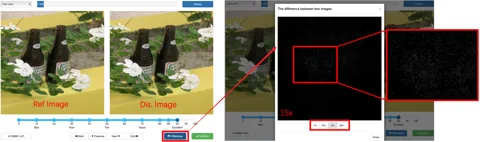
APSD is the official dataset repository for a 2024 paper in IEEE Transactions on Information Forensics and Security (TIFS). The paper is titled "Stealthiness Assessment of Adversarial Perturbation: From a Visual Perspective". An adversarial perturbation is a small change added to an image to mislead a classifier, and this work studies how visible that change is to people. Its starting point is that metrics such as Lp norms, PSNR and SSIM can disagree with human perception. The dataset holds 10,586 image pairs made from 400 reference images with 12 attack methods in five families, such as FGSM, PGD, CW, AdvGAN and Square. Of 60 observers, 15 rated each adversarial example in two steps, first sorting how visible the change is and then scoring it in detail, and the mean opinion score (MOS) from 0 to 1 is the label. The README also describes A2SM, an attention-based model that predicts these scores, and reports 0.984 PLCC and 0.978 SROCC on APSD. The repository has only four files, the README, two figures and a Google Drive link file, with no attack code and no A2SM model code. The data comes from that Drive link, and the README says the exact folder and file names follow the actual package, so its example tree may differ. The license is still to be decided (TBD), and the README says that if the dataset contains images from ImageNet, COCO or VOC2012, their original terms also apply.
License
No license No license file found. Without a license, reuse of the code is not permitted by default.
More in this category
- scrapfly/Antibot-Detector
A Chrome extension that detects anti-bot systems, CAPTCHAs and browser fingerprinting. It analyzes page elements, network requests and browser APIs, and displays detection results and history. - OffGridPete/Fieldwatch
A receive only Wi-Fi and Bluetooth LE observer for Android. The author describes it as passive, listening only, with no dongle, no account and no backend server, built to work offline in the field. It offers a filtering engine, an extensible signature library for identifying radio sources, and reports of what was seen, and everything stays on the phone. - ThinkWatchProject/ThinkWatch-Lite
A local gateway placed in front of Claude Code, Codex and other AI clients on macOS, Windows and Linux. Each client is pointed at the gateway once, after which upstreams and models change without touching client configuration. Every request is recorded with its cost and route, API keys and other secrets can be replaced before a request leaves the machine, and a dangerous tool call that a relay slips into an answer can be cut off before the client runs it. - archestra-ai/OpenAPPA
A guardrail that sits between an agent and its tools and answers one question before every action, whether this data is allowed to go to this destination. It tracks the sensitivity and trust of everything the agent reads and checks each tool call against that record before the call runs. Policy is declarative TOML, and the engine decides from the event log alone and makes no network or file calls, so the same log always gets the same decision. It runs in process or as a sidecar process. - mvt-project/mvt
A mobile forensic toolkit for collecting traces of possible Android and iOS compromise and checking public indicators of compromise. It is intended for investigators with forensic expertise, not end-user self-assessment.
Only repositories in the ranked Trendshift lists are included, and the lists are used only to find candidates. We do not copy their ranks. Descriptions, licenses and star counts come from each GitHub repository. The notes are our own reading. We have not tested these projects, and a place on a trending list does not prove quality.