harvard-edge/cs249r_book
- Source
- GitHub
- First trending
- Category
- Other
- GitHub stars
- 28,252
- Main language
- Python
This page introduces an external open-source repository. It is not an HDATF product.
What it does
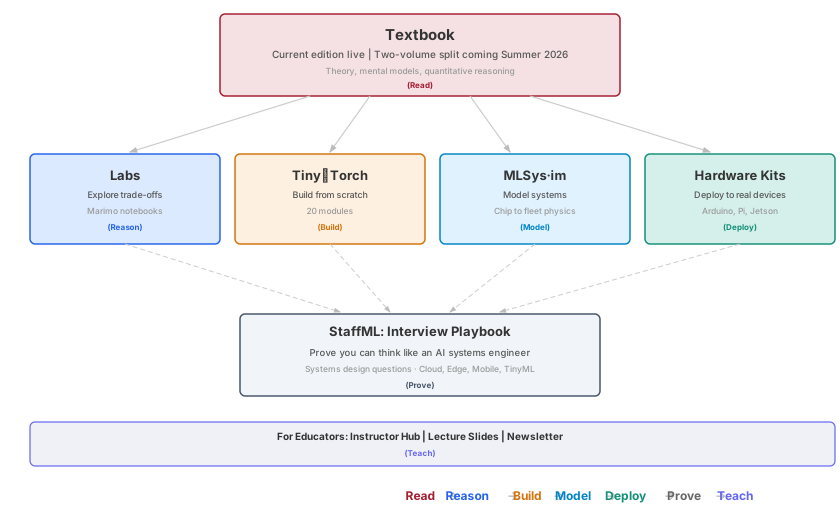
A textbook series on machine learning systems from Harvard CS249r, covering foundations, scaling, agentic AI and physical AI. The repository also holds TinyTorch, labs, hardware kits and a simulator as one curriculum.
How it helps ATF
Could serve as background study material on engineering AI systems for the people building Harness. It is a textbook, not a component to reuse.
License
Custom license Custom or non-standard license. Read the license file before any reuse.
More in this category
- we-promise/sure
A personal finance app that users can self-host with Docker. It is a community-maintained fork of the discontinued Maybe Finance project. - nocodb/nocodb
NocoDB is a free, self-hostable alternative to Airtable for building databases online. It can run through Docker with SQLite or PostgreSQL. - tw93/Mole
Mole is a command-line tool for macOS that cleans caches and leftover files, uninstalls apps with their remnants, analyzes disk usage and shows live system stats. A separate native Mac app is also offered. - francescopace/espectre
Turns a supported ESP32 into a local Wi-Fi motion sensor that detects movement from changes in Wi-Fi signals, without a camera. It includes firmware, a C++ SDK, browser tools, a CLI, and links to Home Assistant and Matter. - lbjlaq/Antigravity-Manager
Antigravity Manager is a Tauri and React desktop app for managing and switching between multiple Antigravity accounts. It also runs a local relay that turns Google or Anthropic web sessions into standard API endpoints and schedules requests across accounts.
Only repositories in the ranked Trendshift lists are included, and the lists are used only to find candidates. We do not copy their ranks. Descriptions, licenses and star counts come from each GitHub repository. The notes are our own reading. We have not tested these projects, and a place on a trending list does not prove quality.